Intelligent Railway Monitoring & Wildlife Detection
Monitor Trains. Detect Track Anomalies. Identify Wildlife. Protect Railway Operations.
Intelligent Fiber Optic Monitoring for Railways
Railway networks are long, complex assets where even a localized event can affect safety, service continuity and operational efficiency. Traditional monitoring methods often rely on individual sensors or periodic inspection. Distributed fiber optic sensing provides a different approach: continuous monitoring along the railway corridor using optical fiber as a distributed sensing element. Senowell Systems integrates Distributed Acoustic Sensing (DAS) and Distributed Temperature & Strain Sensing (DTSS) to provide real-time monitoring of railway operations, track condition, environmental events, fire and third-party intrusion. The same sensing infrastructure can also be configured for wildlife detection, helping identify animals entering or approaching railway corridors and providing an early warning to railway control and operations teams.
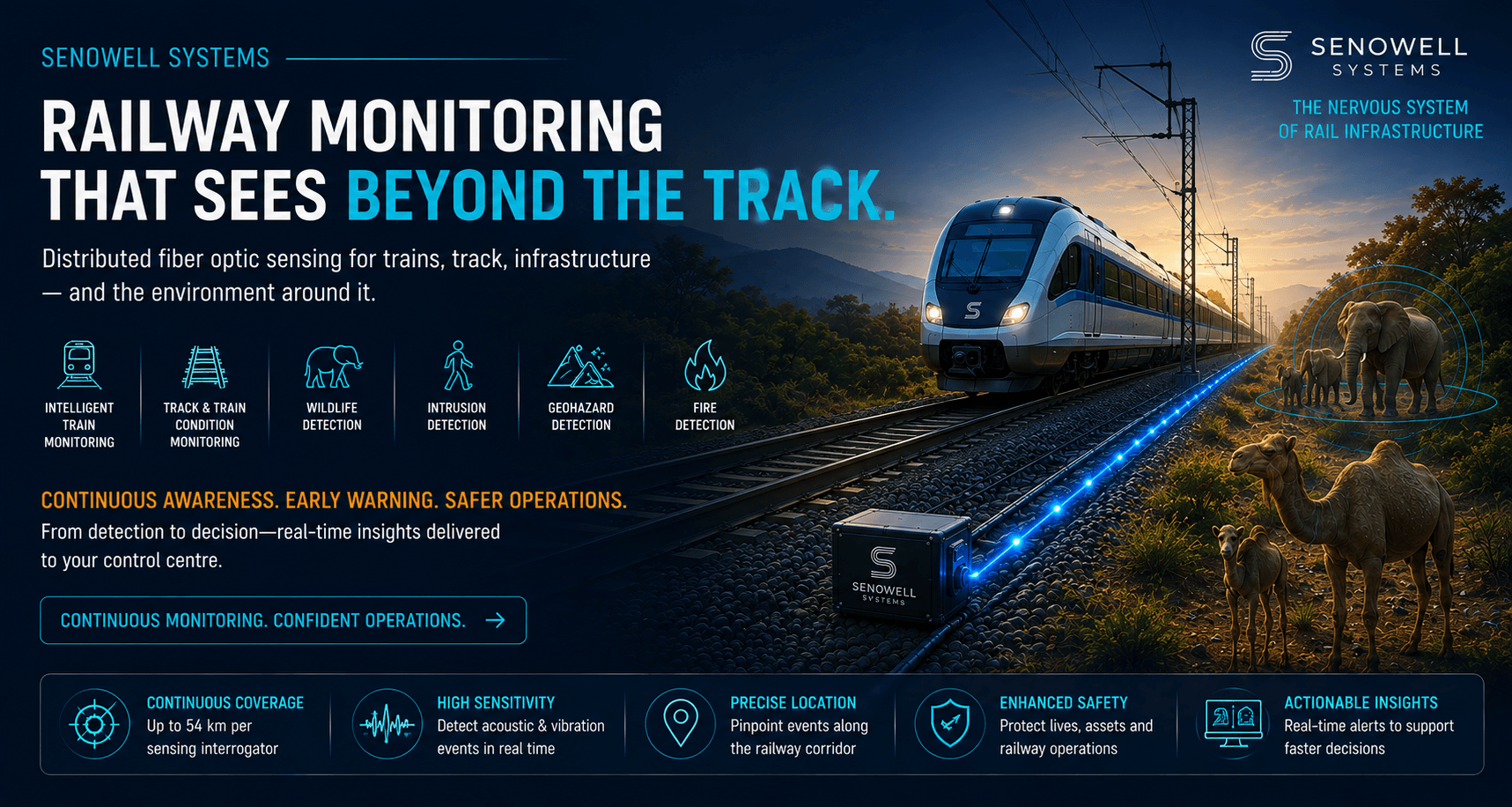
One Fiber. Continuous Railway Awareness.
A fiber optic sensing cable installed along the railway can act as a continuous monitoring layer. Instead of relying only on sensors positioned at selected locations, distributed sensing analyses changes along the monitored fiber. This allows the system to identify and locate events such as: ✓ Train movement ✓ Track vibration ✓ Abnormal acoustic signatures ✓ Track and rail anomalies ✓ People and workers near the railway ✓ Animals entering the railway corridor ✓ Geological events ✓ Fire and temperature events The original railway application identifies DAS for train location, speed, direction, rail and train condition, geological risk events and third-party intrusion, including detection of people, workers and animals.
Intelligent Train Traffic Monitoring
Distributed Acoustic Sensing can use the fiber optic cable installed along the railway to provide information about train movement. The railway monitoring architecture can identify:
Train Location
Determine where a train is travelling along the monitored railway.
Train Direction
Determine the direction of train movement.
Train Speed
Monitor changes in train movement and speed.
Train Characteristics
Acoustic signatures can also provide information related to train characteristics such as length and number of cars. This information can be delivered to the railway control environment to support real-time traffic management.
Wildlife Detection on Railway Tracks
Protecting Railways from Animal Intrusion Railway corridors can pass through areas inhabited by wildlife or livestock. Animals entering the track area can create a significant operational and safety risk. Senowell's distributed acoustic sensing approach can be configured to detect acoustic and vibration signatures associated with animals moving close to or across the railway. This creates a new layer of wildlife intrusion monitoring. Examples include: ✓ Elephants ✓ Camels ✓ Deer ✓ Cattle ✓ Livestock ✓ Other large animals The exact detectable species and classification performance depend on the sensing configuration, installation environment and event-classification algorithms.
From Animal Detection to Early Warning
The objective is not simply to detect an animal. The objective is to provide railway operators with early, location-specific information.
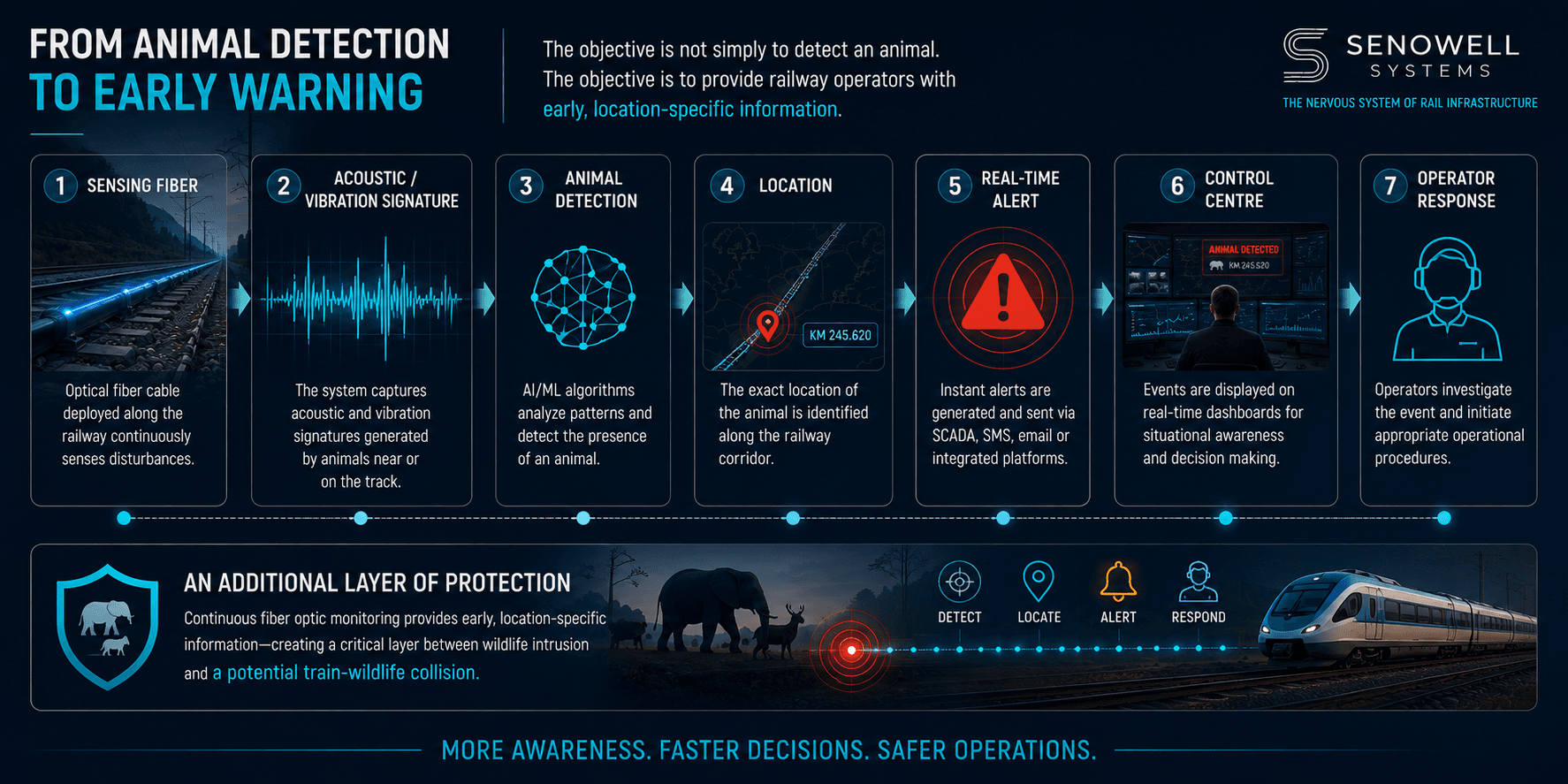
This can allow railway operators to investigate the event and initiate appropriate operational procedures. The result is an additional layer of protection between wildlife intrusion and a potential train-wildlife collision.
Wildlife Detection for High-Risk Railway Corridors
The system can be particularly valuable where railway lines pass through: Wildlife reserves Forests Desert regions Rural areas Agricultural land Animal migration corridors Areas with livestock movement Remote railway infrastructure For regions where large animals frequently cross railway corridors, continuous monitoring can provide an additional source of information for railway operators.
Railway Track Condition Monitoring
The same DAS infrastructure can also monitor the acoustic patterns generated by trains travelling over the railway. This can support the identification of abnormal railway and train behaviour. Potential applications include: ✓ Crack detection ✓ Joint opening ✓ Abnormal rail vibration ✓ Flat-wheel detection ✓ Brake noise ✓ Abnormal train signatures The original application specifically identifies crack detection, joint opening, flat wheels and brake noise as railway and train-condition monitoring applications.
Geological Hazard Detection
Railway infrastructure can be affected by geological events such as: Landslides Rockfalls Ground movement Debris entering the railway corridor Distributed sensing can provide an additional monitoring layer for identifying abnormal acoustic or vibration events associated with hazards around the railway. Early detection can help railway operators investigate the affected section before normal operations are resumed. The source specifically identifies geological risk events, including landslides, as part of the railway application.
Third-Party Intrusion Detection
Railway corridors can also be exposed to unauthorized access. DAS can monitor for activity associated with: ✓ People ✓ Workers ✓ Animals ✓ Vehicles ✓ Other third-party activity The original railway application explicitly lists detection of people, workers and animals under third-party intrusion.
Railway Fire Detection
Distributed Temperature & Strain Sensing can complement acoustic monitoring by providing temperature-based detection. The original application describes combining DAS with DTSS to enable fire detection in: Railway tunnels Cable trays Cable ducts Subway stations Train stations This creates an opportunity to use multiple sensing technologies within one railway monitoring architecture.
A Multi-Layer Railway Monitoring System
DAS — Distributed Acoustic Sensing Movement + Vibration + Acoustic Events → Train detection → Train location → Train direction → Speed → Track anomalies → Wildlife detection → Human intrusion → Geological events
DTSS — Distributed Temperature & Strain Sensing
Temperature + Strain → Fire detection → Thermal monitoring → Structural monitoring → Cable and tunnel monitoring Together, these technologies create a more comprehensive railway monitoring architecture.
Senowell Railway Monitoring Architecture
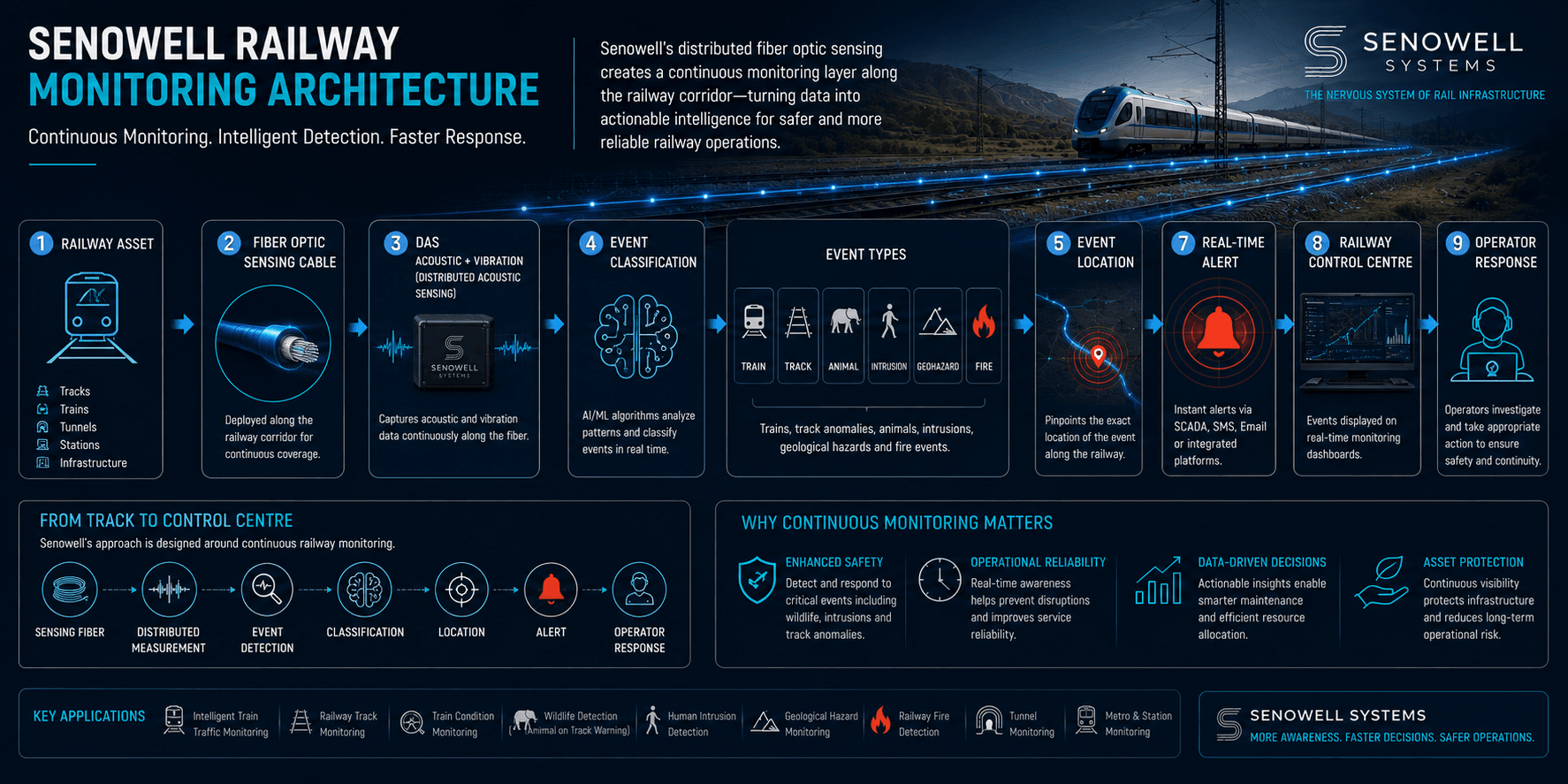
How Can Railways Detect Trains, Track Anomalies, Intrusion and Wildlife Before They Become Operational Risks?
Railway networks cover long distances and often pass through difficult terrain, tunnels, forests, agricultural areas and wildlife corridors. A single monitoring point cannot provide complete visibility across an entire railway. Animals, people, geological events and track anomalies can occur between conventional monitoring locations. Senowell's distributed fiber optic approach creates a continuous sensing layer along the railway, allowing acoustic, vibration and temperature events to be detected and located. For wildlife corridors, this can provide an additional early-warning mechanism for animals entering the track area, helping railway operators take appropriate action before a potential collision occurs.
Downloads
Senowell Railway Monitoring
Brochure • 292 KB
Associated Equipment
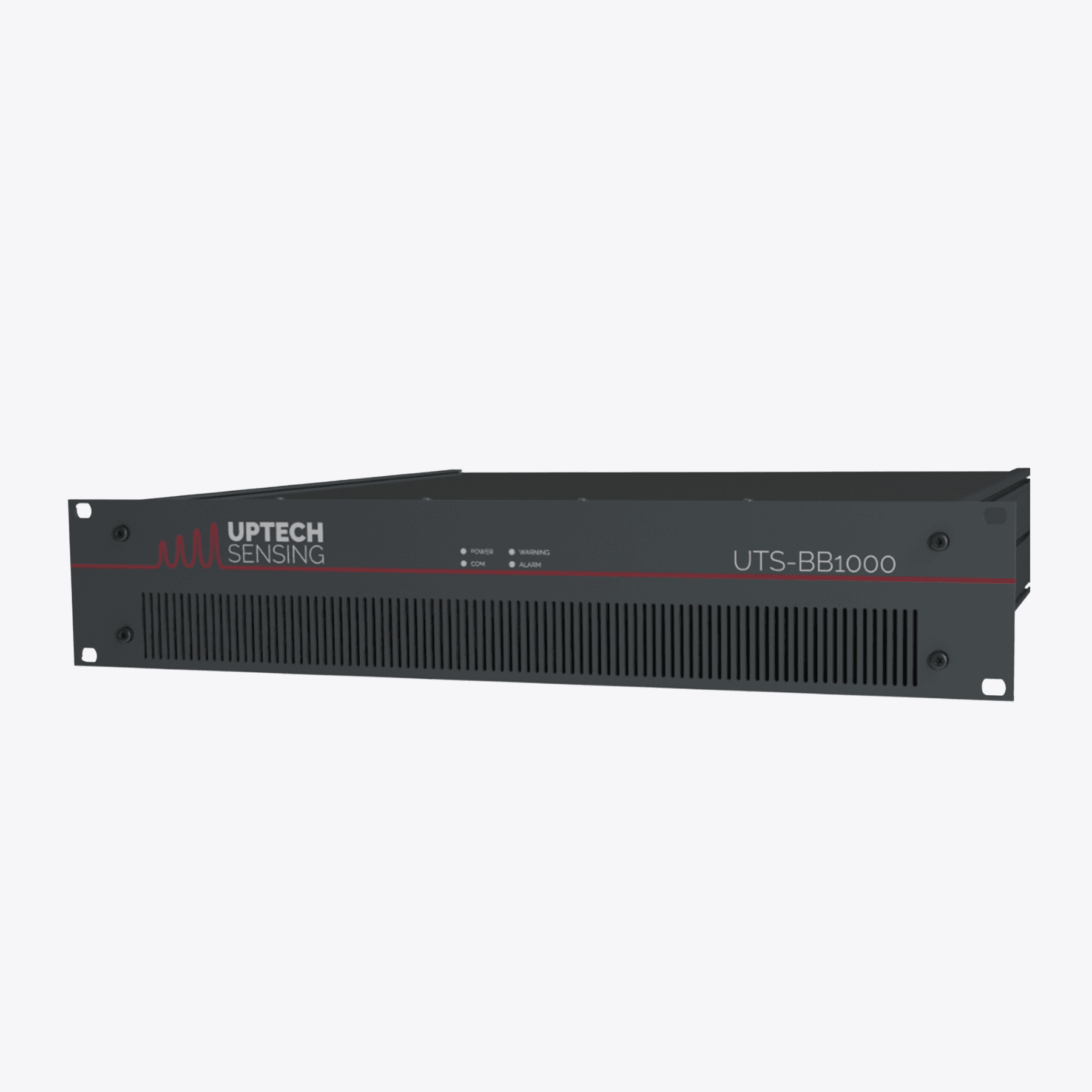
Senowell Uptech UTS-BB1000 Distributed Temperature & Strain Monitoring System
High-Performance Distributed Fiber Optic Sensing for Long-Distance Temperature and Strain Monitoring
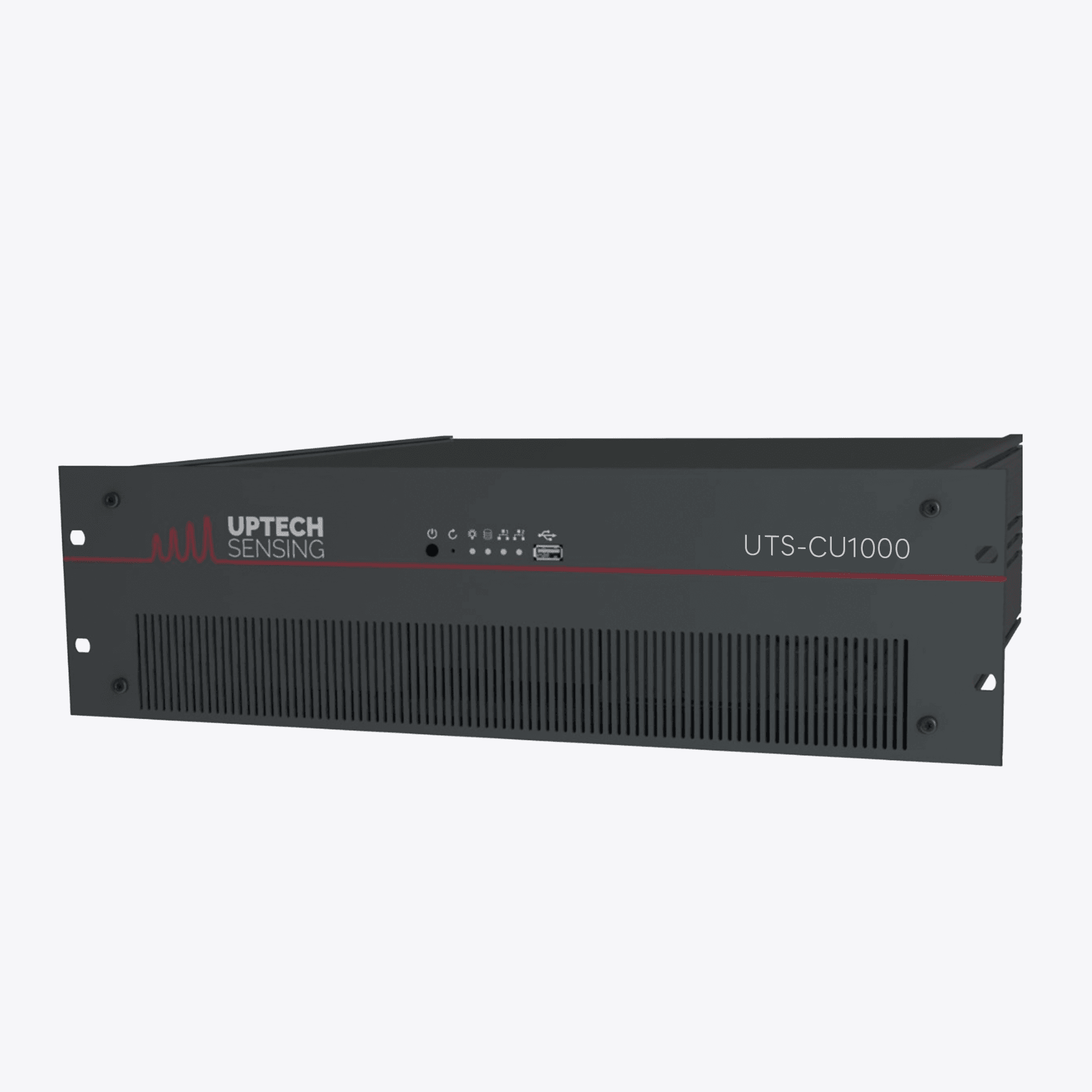
Senowell Uptech UTS-CU1000 Fiber Optic Monitoring Control Unit
High-Performance Edge Computing and Control for Distributed Fiber Optic Sensing Systems
Frequently Asked Questions
Contact us
Submit your inquiry and we will contact you