Fiber Optic Pipeline Monitoring
Detect Leaks, Intrusion and Pipeline Integrity Risks Along Hundreds of Kilometres
Fiber Optic Pipeline Monitoring for Critical Infrastructure
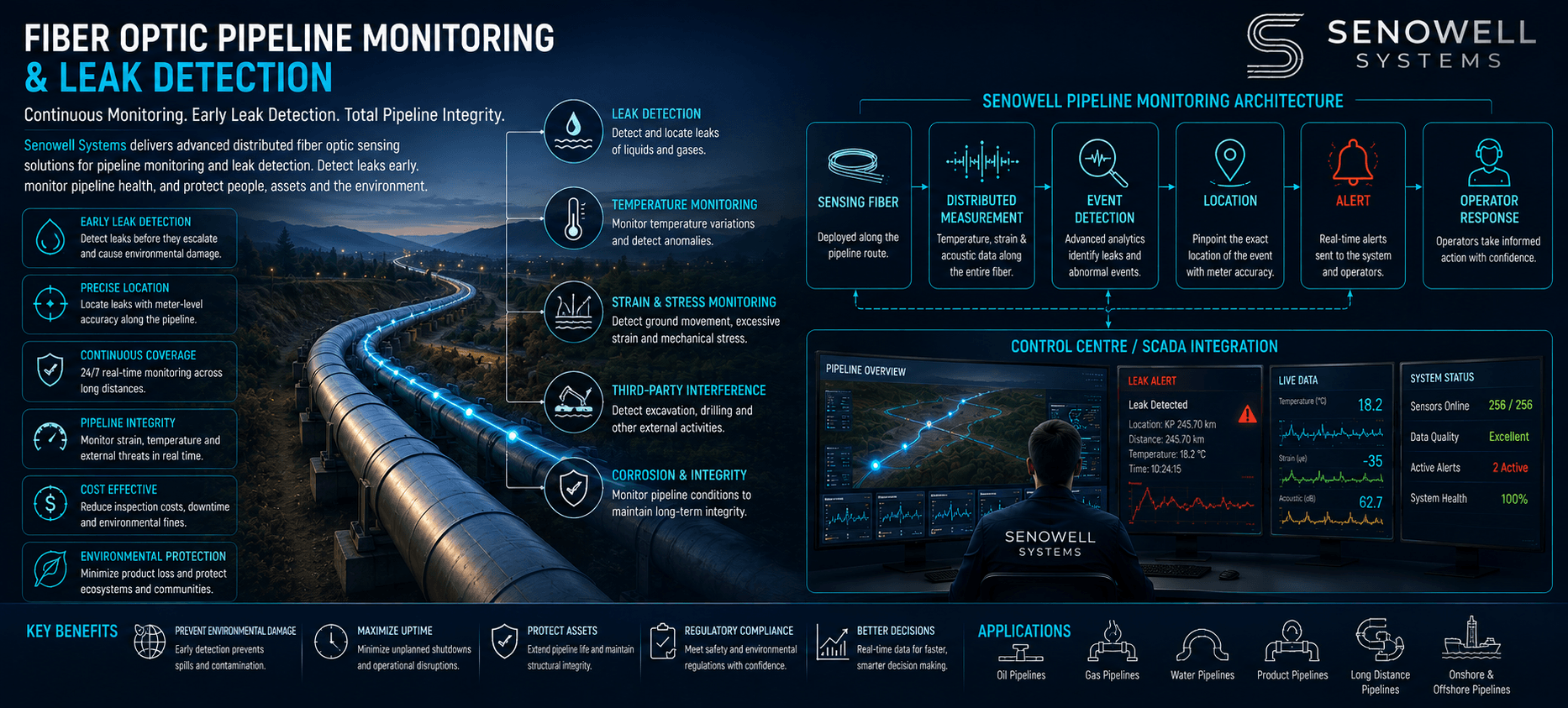
Oil, gas and water pipelines can extend across hundreds of kilometres, making continuous monitoring essential for maintaining asset integrity, protecting the surrounding environment and reducing operational risk. Senowell Systems provides distributed fiber optic pipeline monitoring solutions that combine temperature, strain and acoustic sensing to continuously monitor pipeline conditions in real time. By combining Distributed Temperature and Strain Sensing (DTSS) with Distributed Acoustic Sensing (DAS), pipeline operators can monitor for leaks, third-party intrusion, ground movement and other events along extensive pipeline routes.
Real-Time Pipeline Monitoring
Traditional pipeline inspection methods may provide information only at specific points or during scheduled inspections. Distributed fiber optic sensing provides a different approach. A sensing fiber installed along the pipeline route can provide continuous monitoring information across the monitored section, allowing operators to identify events and determine their location. Senowell Systems uses distributed sensing technologies to support 24/7 pipeline monitoring, helping operators move from periodic inspection toward continuous asset awareness.
Pipeline Leak Detection
Pipeline leaks can create significant safety, environmental and financial consequences. Senowell's fiber optic monitoring architecture can use DTSS and DAS together to identify leak-related events. DTSS monitors temperature variations in the ground surrounding the pipeline, while DAS detects the acoustic and vibration signatures generated by a leak. Combining these sensing mechanisms provides complementary information about the event and can help determine its location for faster investigation and repair.
Distributed Temperature & Strain Sensing
Distributed Temperature and Strain Sensing (DTSS) provides continuous measurement information along the monitored fiber. For pipeline applications, temperature changes around the pipeline can provide an indication of a potential leak, while strain information can provide information about changes affecting the pipeline or surrounding environment. DTSS can also detect ground movement along the pipeline route, including movement associated with seismic activity, landslides and rock falls.
Distributed Acoustic Sensing for Pipeline Security
Distributed Acoustic Sensing (DAS) monitors acoustic and vibration activity along the pipeline. This allows the sensing system to identify events associated with activity around the pipeline, including potential third-party intrusion. The source describes DAS as collecting thousands of acoustic measurement points along the asset, providing real-time information about potential theft or unauthorised construction activity.
Third-Party Intrusion Detection
Pipelines can be exposed to activities taking place around their right-of-way.
These can include:
Unauthorised excavation Construction activity Theft attempts Other third-party activities DAS technology can detect acoustic and vibration events associated with activity around the monitored pipeline and provide operators with information about the location of the event.
Ground Movement & Geohazard Monitoring
Pipeline integrity can also be affected by changes in the surrounding ground. Senowell's distributed fiber optic monitoring approach can detect changes associated with: Ground movement Landslides Rock falls Seismic events Soil erosion DTSS is specifically identified as being sensitive to ground movement along the pipeline route.
Pipeline Deformation Monitoring
Changes in the mechanical condition of a pipeline can be an important indicator of developing integrity issues. Distributed strain sensing can provide information about deformation along the monitored pipeline, supporting earlier identification and investigation of abnormal conditions. The source specifically identifies pipeline deformation detection as an application of the monitoring solution.
Pipeline Wall Temperature Monitoring
Temperature monitoring can provide useful information about pipeline operating conditions and abnormal events. The pipeline application specifically identifies pipeline wall temperature monitoring as one of the supported applications.
Monitoring Buried & Exposed Pipelines
Senowell Systems can develop monitoring architectures for both buried and exposed oil, gas and water pipelines. Fiber optic sensing can be deployed along the pipeline route to create a continuous monitoring layer around critical infrastructure.
One Fiber Optic Monitoring Architecture — Multiple Threats
A major advantage of combining DTSS and DAS is the ability to monitor several different threats using complementary sensing technologies.
DTSS - Temperature + Strain
Detect:
Leak-related temperature changes Pipeline deformation Ground movement Landslide-related movement Rock falls Soil-related events
DAS - Acoustic + Vibration
Detect:
Leak-related acoustic signatures Excavation Third-party intrusion Theft-related activity Unauthorised construction This creates a multi-threat monitoring architecture for long-distance pipeline infrastructure.
From Detection to Location
Detecting that an event has occurred is only part of the problem. Knowing where it happened is critical for pipeline operators. The source states that both DTSS and DAS solutions can accurately locate events along the monitored pipeline, helping operators direct inspection and repair teams to the affected location.
Continuous Pipeline Asset Awareness
Senowell Systems' approach is designed around continuous monitoring rather than isolated inspection points. The result is a monitoring layer that can provide operators with:
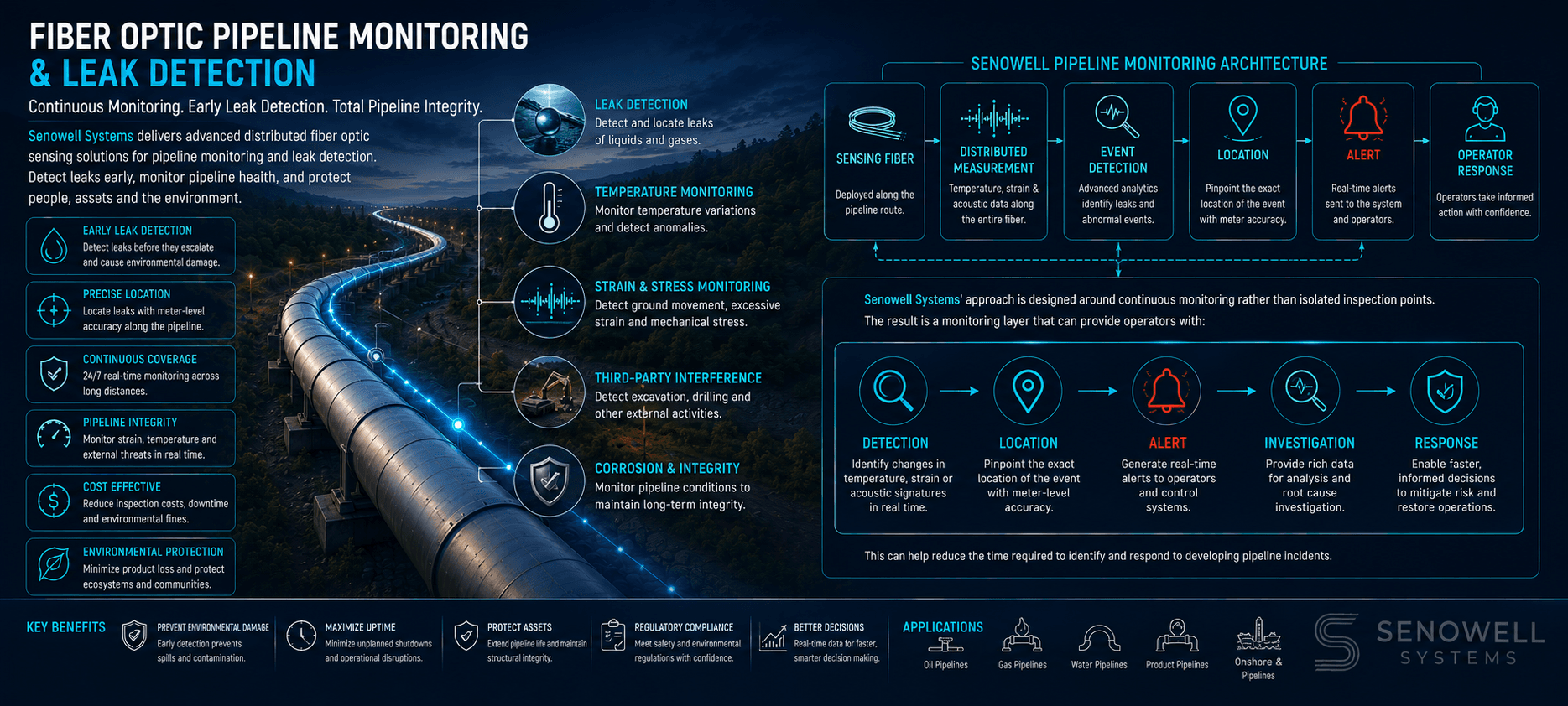
Key Benefits
24/7 pipeline monitoring Distributed fiber optic sensing Leak detection Leak location Third-party intrusion detection Pipeline deformation monitoring Ground movement detection Landslide monitoring Rock fall detection Soil erosion monitoring Pipeline wall temperature monitoring Long-distance monitoring Real-time event detection Reduced inspection and response time Monitoring of buried and exposed pipelines
How Do You Monitor Hundreds of Kilometres of Pipeline Continuously?
Oil, gas and water pipelines can extend across vast and geographically difficult areas. Monitoring every section using conventional point sensors can become complex as the monitored distance increases. Pipeline operators also need to consider multiple threats simultaneously — from leaks and deformation to third-party intrusion, ground movement and landslides. Senowell Systems uses distributed fiber optic sensing to create a continuous monitoring layer along the pipeline route by combining DTSS temperature and strain monitoring with DAS acoustic and vibration monitoring; operators can detect different types of events, identify their location and receive information in real time. This enables a more comprehensive approach to pipeline integrity, leak detection and infrastructure security.
Applications:
Pipeline Leak Detection:
- · Distributed fiber optic monitoring for detecting and locating potential pipeline leaks using temperature, strain, acoustic and vibration information.
Pipeline Rupture Detection:
- · Continuous monitoring for events associated with pipeline rupture and abnormal changes along the monitored route.
Third-Party Intrusion Detection:
- · Distributed acoustic sensing for detecting excavation, construction, theft and other third-party activities around pipeline infrastructure.
Pipeline Deformation Monitoring:
- · Distributed strain monitoring for identifying deformation and changes affecting pipeline integrity.
Ground Movement Monitoring:
- · Fiber optic monitoring for detecting ground movement along pipeline routes, including changes associated with seismic events and geological hazards.
Landslide & Rock Fall Detection:
- · Continuous monitoring of pipeline corridors exposed to landslides, rock falls and other ground movement hazards.
Pipeline Wall Temperature Monitoring:
- · Distributed temperature monitoring for observing pipeline wall temperature along the monitored asset.
Soil Erosion Monitoring:
- · Fiber optic monitoring for identifying early signs of soil erosion that may affect pipeline integrity.
Assets:
- Oil Pipelines
- Gas Pipelines
- Water Pipelines
- Buried Pipelines
- Exposed Pipelines
Downloads
Senowell Fiber Optic Pipe Leak Detection System
Brochure • 268 KB
Frequently Asked Questions
Contact us
Submit your inquiry and we will contact you