Fiber Optic LNG Plant Monitoring
Detect Cryogenic Leaks, Monitor Temperature and Protect Critical LNG Infrastructure
Fiber Optic Monitoring for LNG Facilities
Liquefied Natural Gas (LNG) facilities operate under demanding cryogenic and safety conditions. Detecting leaks quickly, monitoring temperature behaviour and protecting critical plant areas are essential for safe and reliable operation. Senowell Systems provides distributed fiber optic sensing solutions for LNG plant monitoring, combining Distributed Temperature and Strain Sensing (DTSS) with Distributed Acoustic Sensing (DAS). The system can be used to monitor pipelines, tank annular spaces, foundations, containment areas and other critical parts of an LNG facility.
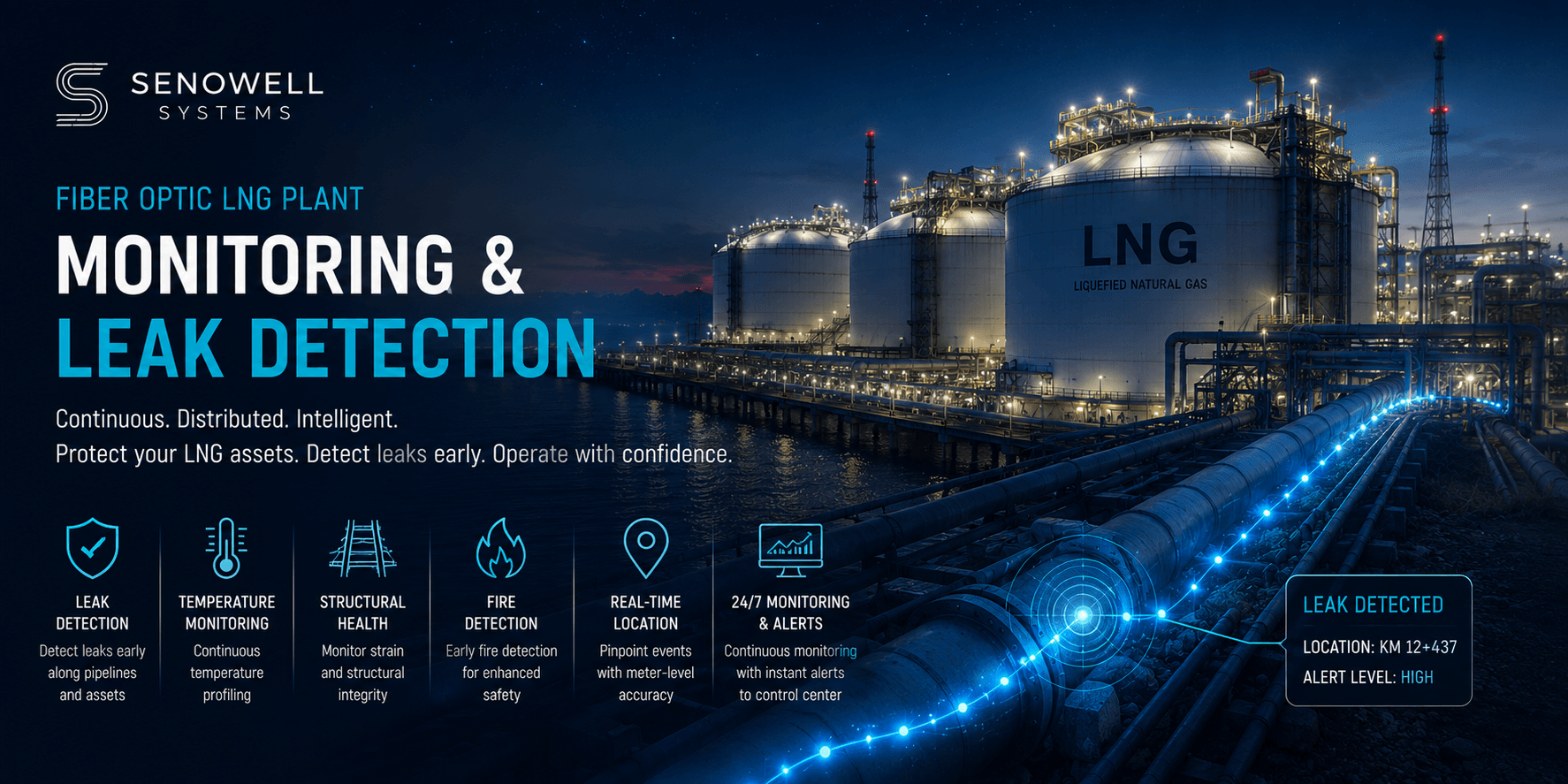
Cryogenic LNG Leak Detection
LNG leakage produces a significant local temperature change because of the extremely low temperature of the released product. Distributed Temperature Sensing can detect these low-temperature changes along the monitored fiber. The published LNG monitoring solution is specified for temperature measurement down to −196°C and states that leak location can be achieved with an error of less than one metre within the plant. This makes distributed fiber optic sensing particularly valuable for monitoring long sections of LNG infrastructure where conventional point sensors may leave areas between sensors unmonitored.
Distributed Temperature Sensing for LNG Distributed Temperature Sensing (DTSS) provides temperature information along the monitored fiber rather than only at individual sensor locations. For LNG facilities, this can provide information about: Cryogenic temperature changes Potential LNG leaks Pipeline temperature Tank annular spaces Containment areas Loading and unloading operations Heating-system anomalies The source specifically identifies DTSS for LNG leak detection and temperature monitoring.
LNG Leak Location
For an LNG facility, detecting a leak is only the first step.
Operators also need to know:
Where is the leak? Distributed fiber optic sensing provides spatially resolved temperature information along the sensing cable. The published system specifies leak localization with an error of less than one metre in the plant.This can help operators identify the affected section and direct inspection and response activities more efficiently.
LNG Loading & Unloading Monitoring
Temperature monitoring can also support LNG loading and unloading operations. The DTSS solution provides thermal information that can be used to monitor cooling operations during loading and unloading processes. This creates an additional layer of operational visibility beyond leak detection.
LNG Thermal Process Monitoring
Temperature data can provide information about the thermal behaviour of an LNG facility. The source identifies the use of DTSS thermal information to identify anomalies in heating systems and potentially reduce total energy consumption. This allows the same sensing infrastructure to contribute to both safety monitoring and process optimization.
LNG Tank & Containment Monitoring
Critical LNG infrastructure can include: Tank annular spaces Base slabs Foundations Pipelines Plant areas Containment areas Distributed fiber optic sensing can be deployed around or along selected assets to create a continuous monitoring layer. These asset types are specifically identified on the source LNG application page.
DAS Perimeter Security for LNG Facilities
LNG facilities require not only process and leak monitoring but also protection against unauthorized activity around critical areas. Distributed Acoustic Sensing (DAS) can be used to monitor the facility perimeter for acoustic and vibration activity associated with third-party intrusion. The source describes thousands of acoustic measurement points along the perimeter providing real-time information about possible access activity.
Multi-Layer LNG Facility Monitoring
Senowell can combine different distributed sensing technologies within one monitoring architecture.
DTSS
Temperature & Strain
Used for: ✓ LNG leak detection ✓ Cryogenic temperature monitoring ✓ Process monitoring ✓ Loading and unloading monitoring ✓ Thermal anomaly detection
DAS
Acoustic & Vibration
Used for: ✓ Perimeter intrusion detection ✓ Unauthorized access monitoring ✓ Theft detection ✓ Unauthorized work detection Together, these technologies create a broader monitoring layer across the LNG facility.
Real-Time LNG Asset Awareness
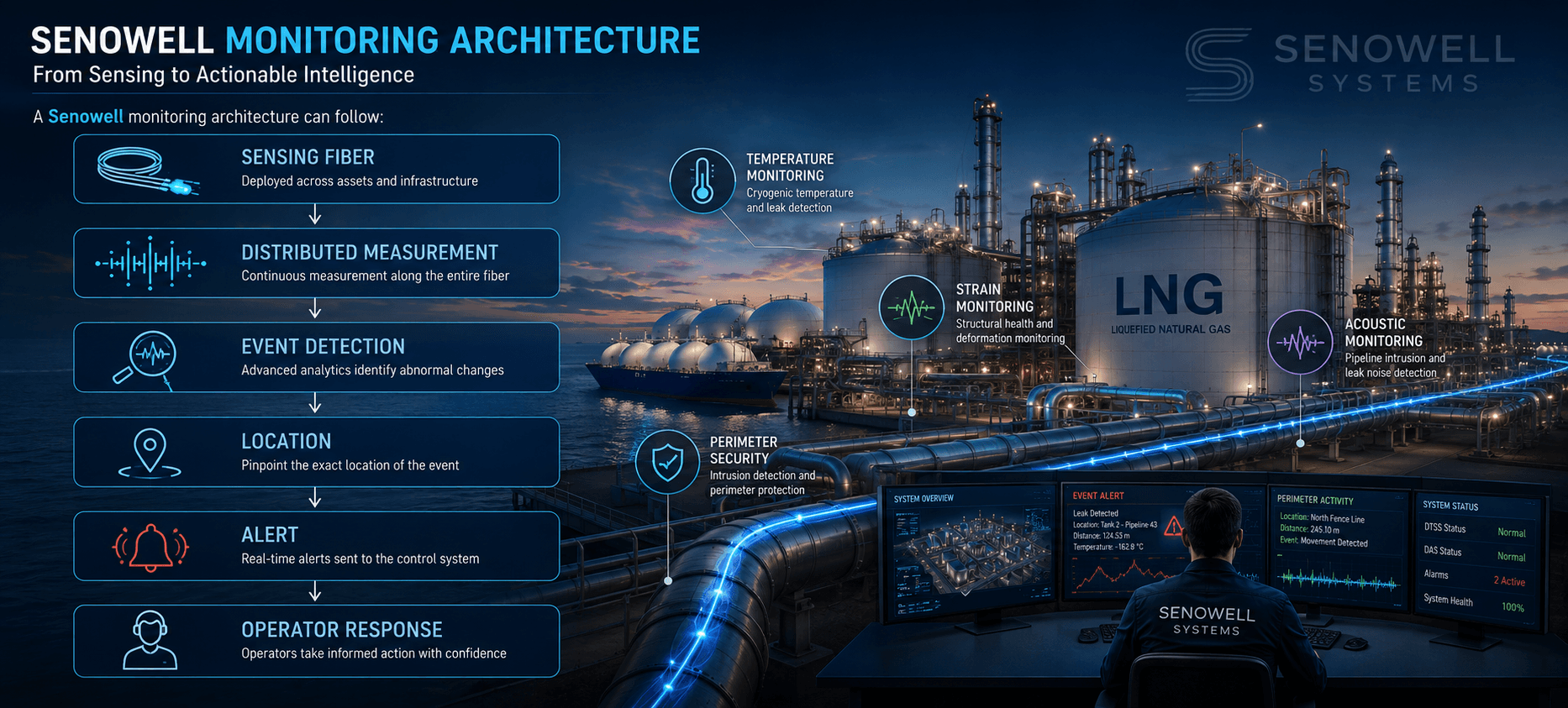
The objective of LNG monitoring is not simply to collect sensor measurements. The objective is to turn those measurements into actionable information. A Senowell monitoring architecture can follow:
LNG Fire Detection
Fiber optic temperature monitoring can also support fire detection applications within LNG facilities. The LNG application specifically identifies fire detection as one of the supported applications. This can provide another monitoring capability using the same general fiber-optic sensing architecture. Monitoring LNG Transportation & Regasification The published application also identifies transportation and regasification monitoring as an LNG application. This extends the potential monitoring architecture beyond storage and processing areas to other parts of the LNG infrastructure chain.
Why Fiber Optic Sensing for LNG?
Fiber optic sensing offers several characteristics that make it attractive for critical LNG environments.
Distributed Monitoring
A sensing fiber can provide measurements across a continuous monitored section. Cryogenic Temperature Measurement The published DTSS solution supports temperature measurement down to −196°C.
Precise Event Location
The published LNG application specifies leak localization with an error of less than one metre.
Long Monitoring Routes
Fiber optic sensing can monitor extended sections of pipelines, plant infrastructure and perimeter areas.
Multiple Monitoring Functions
Temperature, strain and acoustic sensing can be combined to address different monitoring requirements.
Senowell LNG Monitoring Architecture
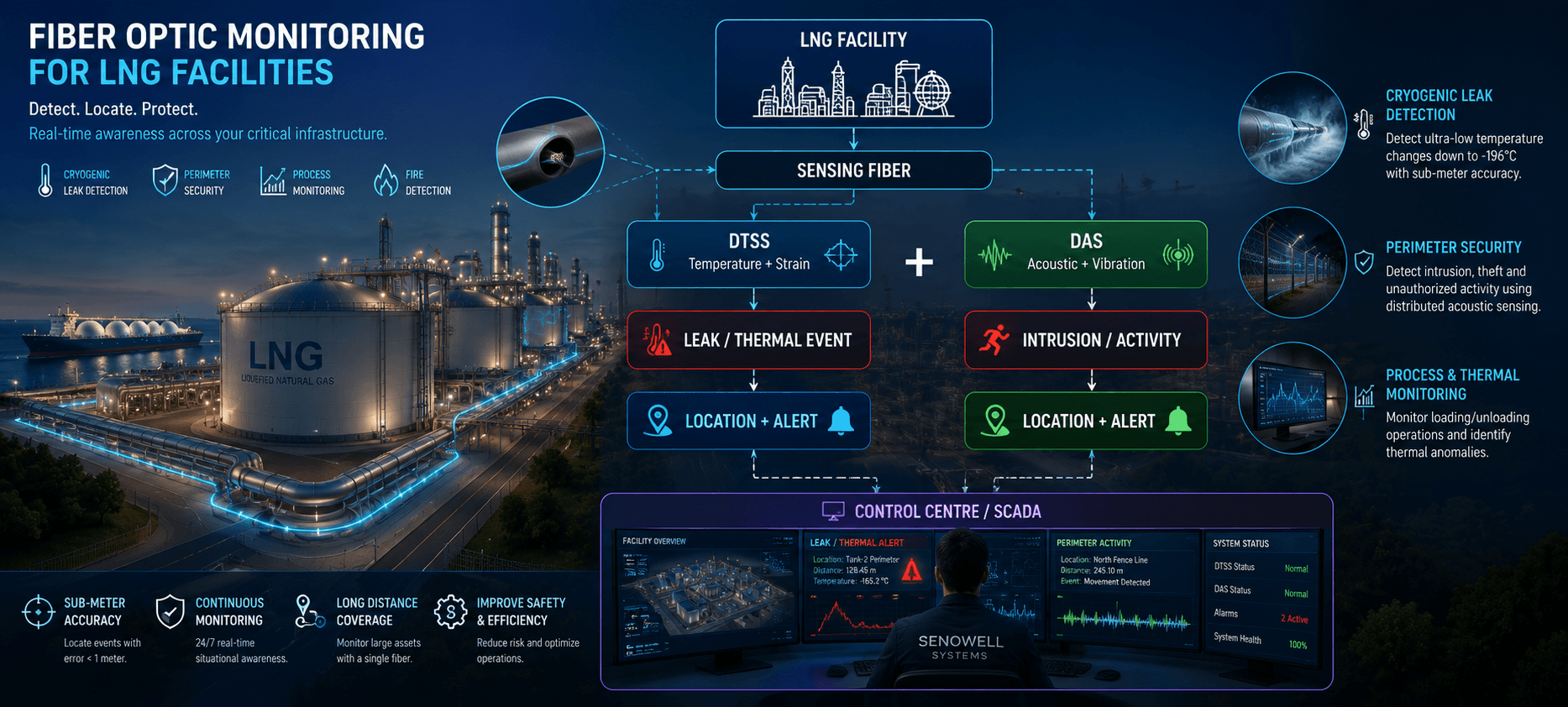
How Do You Monitor an LNG Facility for Leaks, Temperature Changes and Intrusion?
LNG facilities combine cryogenic processes, pipelines, storage infrastructure and large protected areas.
A monitoring system therefore needs to identify more than one type of event.
A potential leak may create a localized low-temperature event, while unauthorized activity around the facility can create acoustic and vibration signatures.
Senowell Systems combines distributed temperature sensing and distributed acoustic sensing to create a multi-layer monitoring architecture for LNG facilities.
The result is a continuous sensing layer designed to help operators detect, locate and respond to critical events.
Applications:
LNG Leak Detection:
- · Distributed temperature monitoring for detecting and locating low-temperature events associated with potential LNG leaks.
Cryogenic Temperature Monitoring:
- · Continuous monitoring of temperature conditions across selected LNG infrastructure.
LNG Loading & Unloading Monitoring:
- · Thermal monitoring during LNG loading and unloading operations.
Containment Area Monitoring:
- · Monitoring of LNG containment areas and associated infrastructure.
LNG Pipeline Monitoring:
- · Distributed temperature and strain monitoring for LNG pipeline infrastructure.
LNG Fire Detection:
- · Fiber optic temperature monitoring for fire detection applications.
Thermal Process Monitoring:
- · Monitoring thermal behaviour and identifying potential anomalies in heating systems.
LNG Perimeter Security:
- · Distributed acoustic sensing for monitoring activity around LNG facility perimeters.
Third-Party Intrusion Detection:
- · Detection of unauthorized activity, theft or unauthorized work around protected LNG infrastructure.
Regasification Monitoring:
- · Monitoring applications associated with LNG transportation and regasification infrastructure.
Assets:
- LNG Storage Tanks
- LNG Pipelines
- Foundations & Base Slabs
- Containment Areas
- LNG Plant
Downloads
Senowell Fiberoptic LNG Monitoring System
Brochure • 269 KB
Associated Equipment
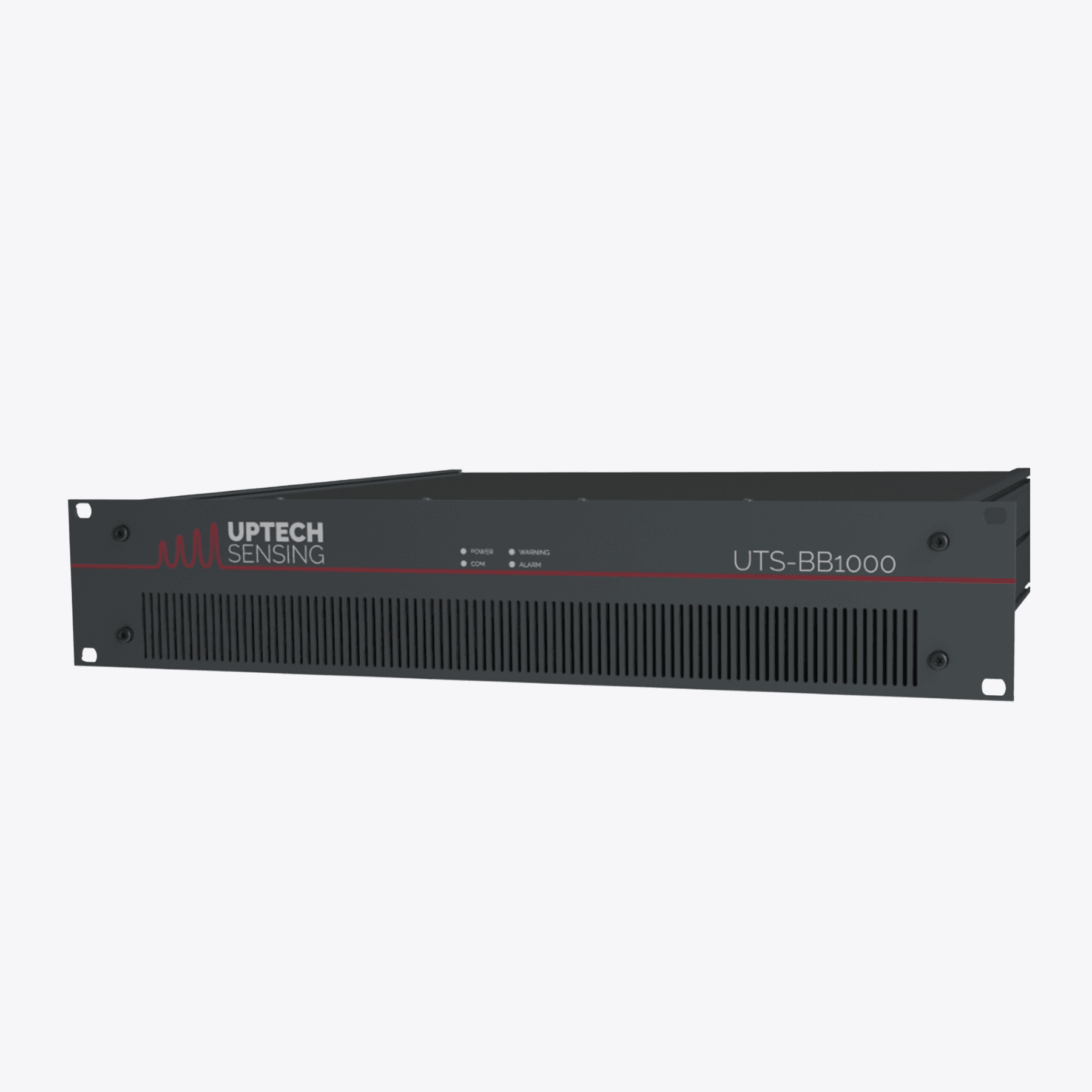
Senowell Uptech UTS-BB1000 Distributed Temperature & Strain Monitoring System
High-Performance Distributed Fiber Optic Sensing for Long-Distance Temperature and Strain Monitoring
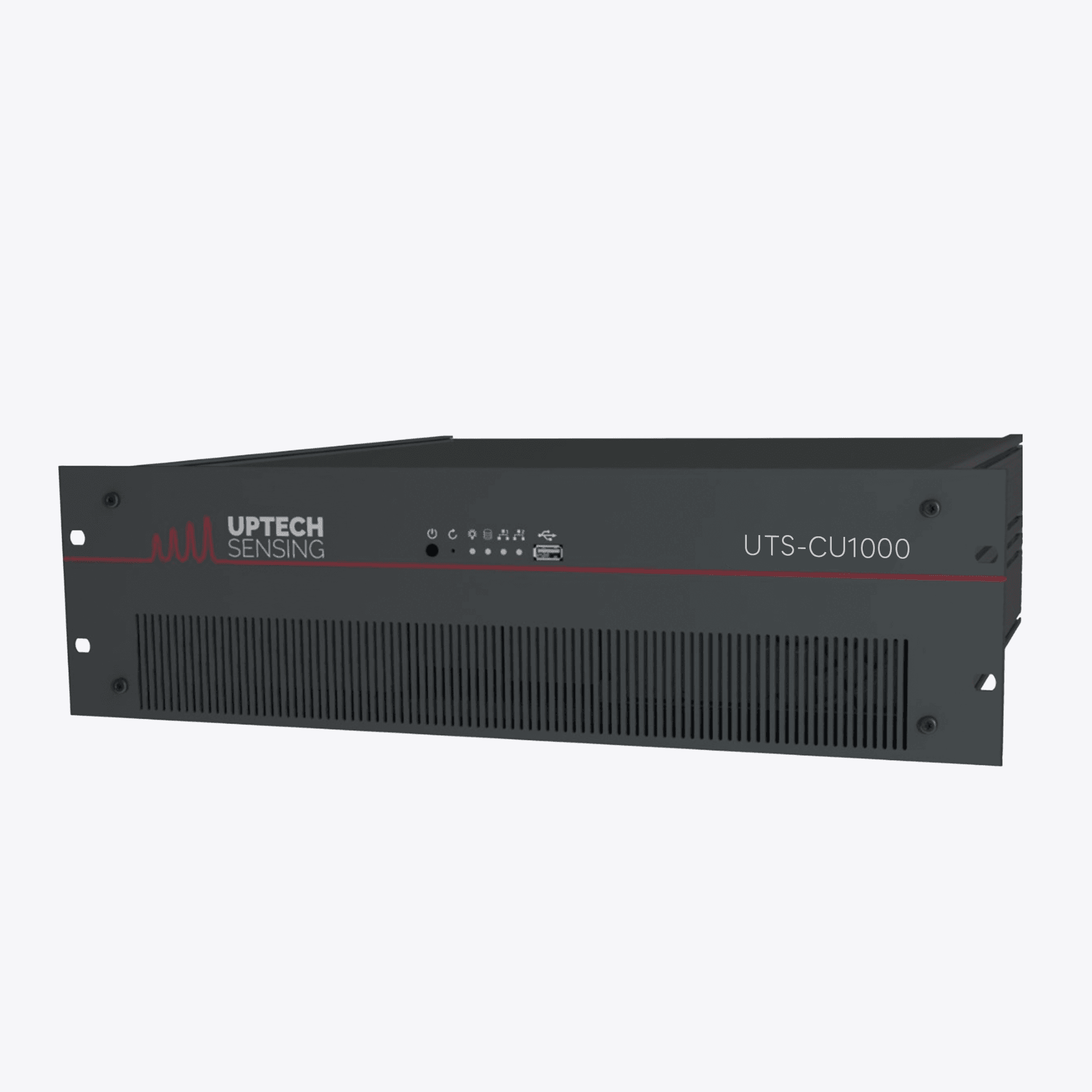
Senowell Uptech UTS-CU1000 Fiber Optic Monitoring Control Unit
High-Performance Edge Computing and Control for Distributed Fiber Optic Sensing Systems
Frequently Asked Questions
Contact us
Submit your inquiry and we will contact you